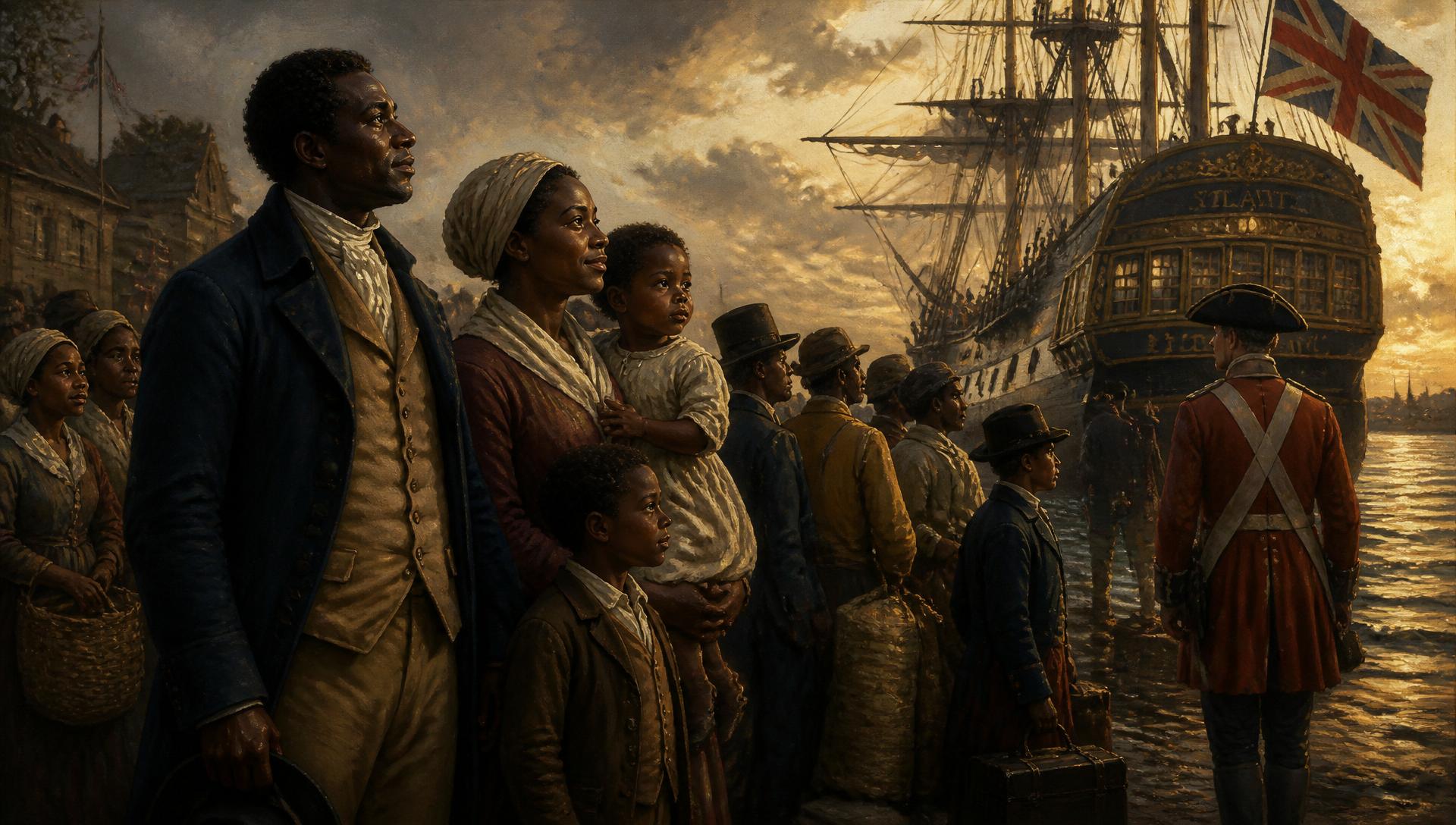
Painting of Black Loyalist families gathering at a harbor beside a British ship during the American Revolution

Revolutionary War · Pursuit of Freedom

Black Loyalists

Freedom Promised. Freedom Pursued.

For thousands of enslaved Africans and free Black people, the American Revolution was not simply a conflict between Britain and the colonies — it was a struggle for freedom. When the British offered emancipation to enslaved people who escaped Patriot enslavers, many risked everything in pursuit of liberty. Their courage, sacrifice, and determination shaped history in America, Canada, the Caribbean, and West Africa.

An Educational Overview

Understanding the Black Loyalists

Who Were the Black Loyalists?

Black Loyalists were enslaved and free people of African descent who aligned with the British Crown during the American Revolution. Numbering in the tens of thousands, they included soldiers, laborers, guides, pilots, cooks, nurses, and whole families in search of a new life.
Why Did They Choose the British?

When the British promised freedom to enslaved people who escaped Patriot enslavers, they opened a door that the Revolution had left closed. For most, the choice was not loyalty to a king — it was the pursuit of liberty for themselves and their children.

Freedom, Not Allegiance

It is essential to understand that the great majority were enslaved people seeking emancipation rather than subjects fighting out of devotion to Britain. Their allegiance was to freedom itself, wherever it could be found.

A Complex and Courageous Story

The African American experience during the Revolutionary War was complex, courageous, and deeply personal. While some fought alongside the Patriot cause, others sought freedom through the British Crown. DHF is committed to telling the complete story—preserving the history of Black Patriots, Black Loyalists, and the shared pursuit of liberty that defined their struggle.

The Road to Freedom

Key Historical Events

1775

Lord Dunmore's Proclamation

The royal governor of Virginia, Lord Dunmore, offered freedom to enslaved men owned by Patriot masters who escaped and took up arms for the British. Thousands answered the call, transforming a colonial rebellion into a struggle over slavery itself.

1775

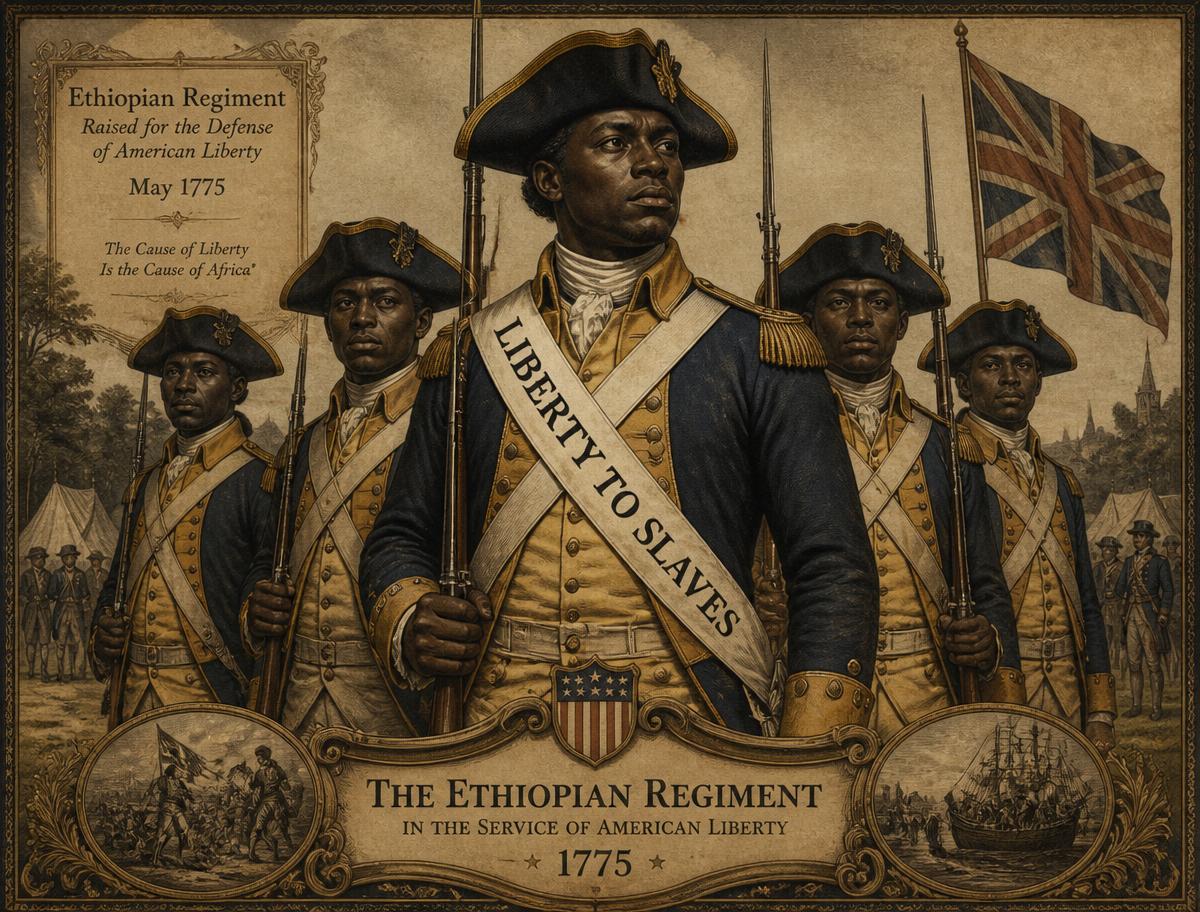
The Ethiopian Regiment

Formed from those who answered Dunmore's offer, the Ethiopian Regiment became one of the first Black military units of the Revolution. Its soldiers famously wore a sash bearing the words “Liberty to Slaves.”

1779

The Philipsburg Proclamation

General Sir Henry Clinton expanded Britain's offer, promising protection and freedom to any enslaved person escaping a Patriot owner — not only those who bore arms. It dramatically widened the path to liberty.

1780s

The Black Brigade

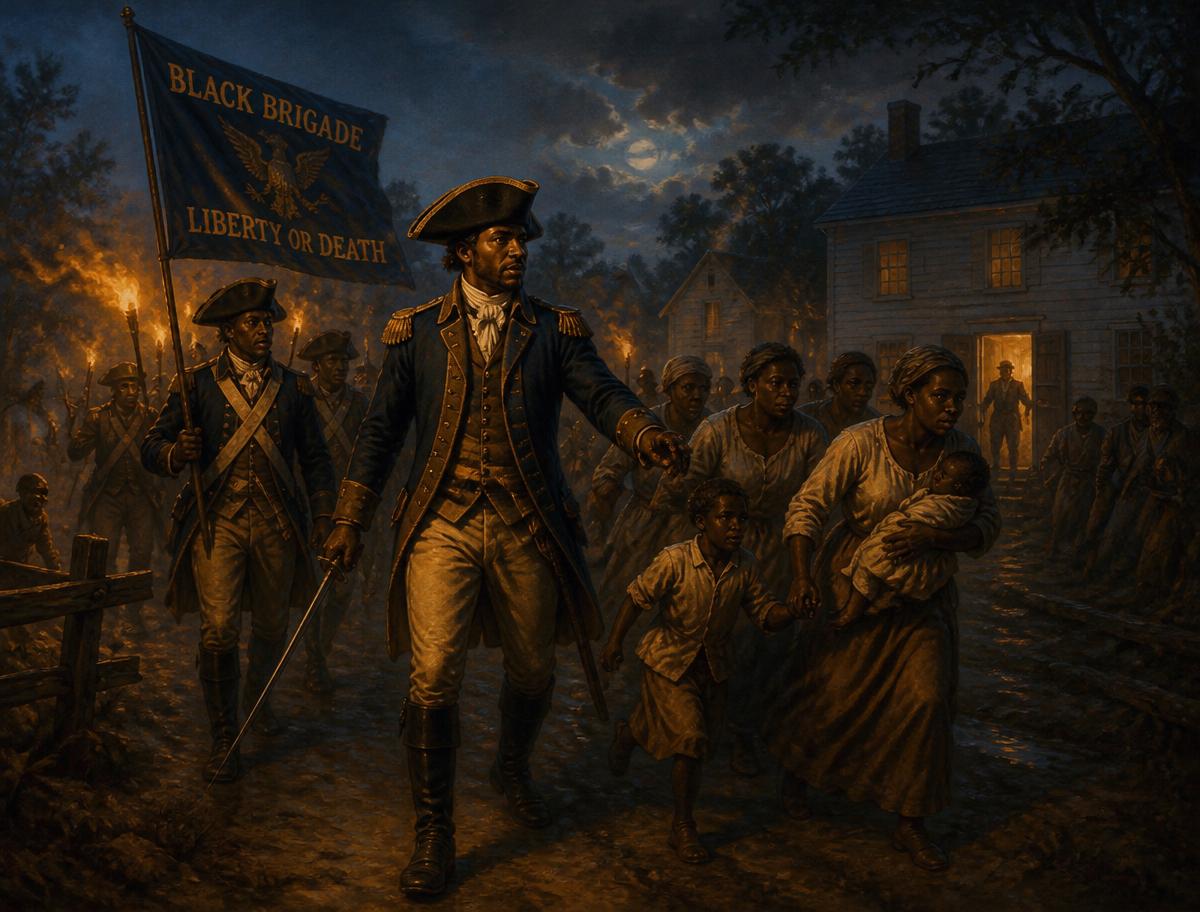
Led by the formerly enslaved Colonel Tye, the Black Brigade became one of the most feared and effective Loyalist guerrilla units of the war, striking Patriot strongholds across New Jersey and liberating the enslaved.

1783

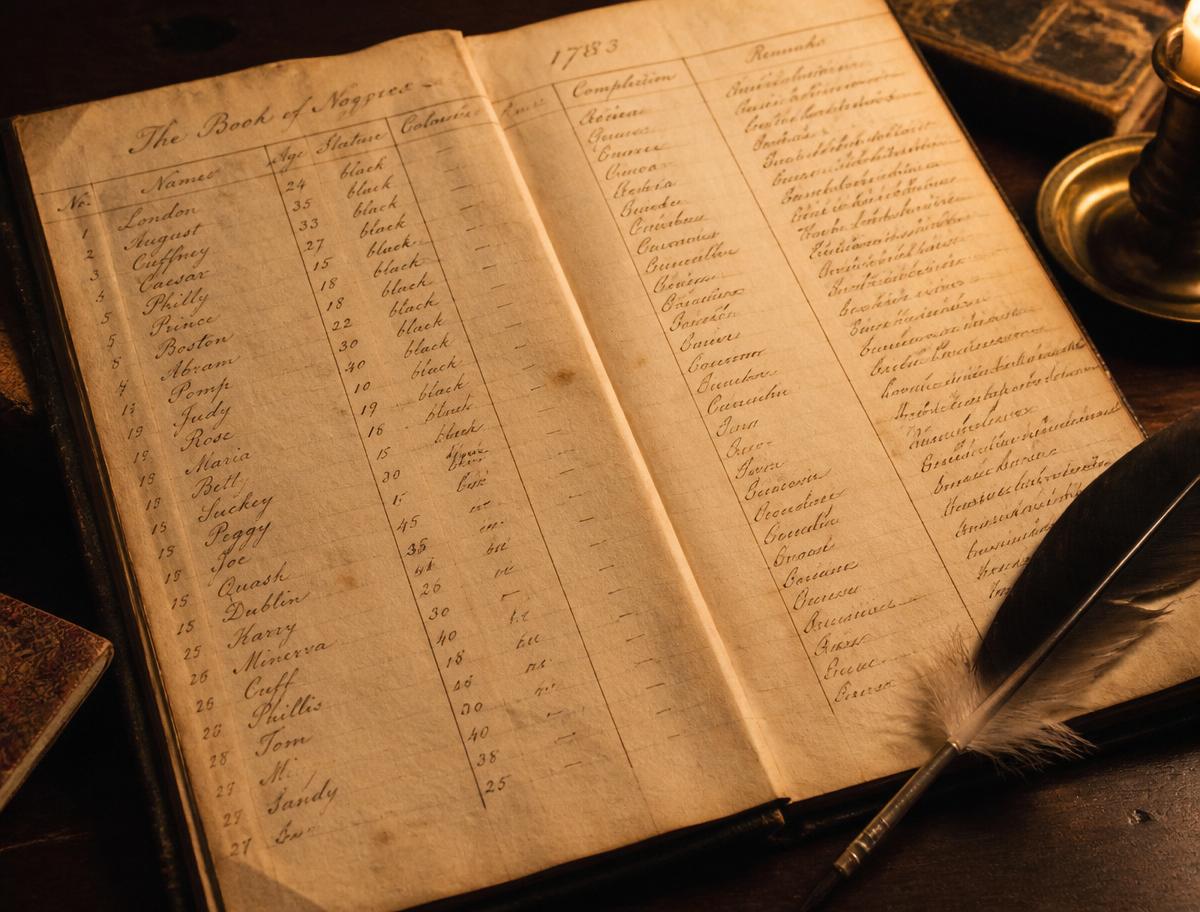
The Book of Negroes

As the British evacuated New York, they recorded roughly 3,000 Black Loyalists in a ledger known as the Book of Negroes — one of the most important surviving records of these families, and an invaluable resource for genealogists today.

1783

Settlement in Nova Scotia

Thousands of Black Loyalists were resettled in Nova Scotia and New Brunswick, founding communities such as Birchtown — for a time the largest free Black settlement in North America.

1792

The Founding of Sierra Leone

Facing discrimination, poor land, and broken promises in Nova Scotia, nearly 1,200 Black Loyalists sailed to West Africa and founded Freetown, Sierra Leone — a homeland shaped by their own hands.

Lives of Courage

Notable Black Loyalists

C

Guerrilla Commander

Colonel Tye (Titus Cornelius)

Born into slavery in New Jersey, Titus escaped and rose to lead the Black Brigade. Renowned for daring raids and tactical brilliance, he became one of the most effective military leaders of the war.

Learn More
T

Founder & Leader

Thomas Peters

A formerly enslaved man who served with the Black Pioneers, Peters became a tireless advocate for Black Loyalists and helped lead the 1792 migration that founded Freetown, Sierra Leone.

Learn More
B

Preacher & Memoirist

Boston King

Escaping slavery in South Carolina, King became a Methodist preacher in Nova Scotia and later Sierra Leone. His published memoir is a rare firsthand account of the Black Loyalist experience.

Learn More
D

Baptist Pioneer

David George

Born enslaved in Virginia, George founded one of the earliest Black Baptist congregations in North America and carried his ministry to Nova Scotia and Sierra Leone.

Learn More
H

Soldier & Settler

Harry Washington

Once enslaved by George Washington, Harry Washington escaped to the British, served in the war, and journeyed onward to Nova Scotia and finally Sierra Leone in his lifelong pursuit of freedom.

Learn More

Those Who Shaped Events

Historical Figures

Lord Dunmore

Royal Governor of Virginia

John Murray, 4th Earl of Dunmore, issued the 1775 proclamation offering freedom to enslaved men who joined the British. Though driven by military strategy, his decree turned the war into a contest over slavery and set thousands on the road to liberty.

General Sir Henry Clinton

Commander-in-Chief, British Forces

Clinton's 1779 Philipsburg Proclamation broadened Britain's offer of freedom to all enslaved people escaping Patriot owners. His policy vastly increased the number of self-emancipated people who reached British lines.

Under Arms for Liberty

Military Units

Historical illustration of the Ethiopian Regiment, Black soldiers wearing a sash reading Liberty to Slaves, 1775

Est. 1775

The Ethiopian Regiment

Raised from the men who answered Lord Dunmore's Proclamation, the Ethiopian Regiment was among the first Black military units in North America. Its soldiers marched under a banner of self-liberation.

Across their uniforms they wore a white sash inscribed "Liberty to Slaves" — a bold declaration that their fight was, above all, a fight for their own freedom.

Though the regiment was short-lived, its symbolism endured, marking a turning point in how the war over independence became entangled with the question of slavery itself.

Historical illustration of Colonel Tye and the Black Brigade liberating enslaved people in New Jersey during the American Revolution

Guerrilla Warfare · New Jersey

The Black Brigade

Led by the formerly enslaved Colonel Tye, the Black Brigade waged a relentless guerrilla campaign across New Jersey, ambushing Patriot militias and seizing supplies with remarkable precision.

Their raids liberated enslaved people from Patriot households, striking not only at the enemy's forces but at the institution of slavery itself.

Feared and respected in equal measure, the Black Brigade demonstrated the discipline, daring, and leadership of Black Loyalists in arms.

A Journey for Freedom

The Path of the Black Loyalists

Virginia → New York → Nova Scotia → Sierra Leone

1775

Virginia

The journey begins where Lord Dunmore's Proclamation first promised freedom. Enslaved people fled Patriot plantations to reach British lines.

Did You Know?

Nearly 20,000 enslaved Africans sought freedom with the British during the Revolutionary War.

Colonel Tye became one of the most effective military leaders of the entire war.

The Ethiopian Regiment wore “Liberty to Slaves” across their uniforms.

The Book of Negroes is still used by genealogists tracing Black Loyalist ancestry today.

Descendants of Black Loyalists now live across Canada, Sierra Leone, the Caribbean, the United States, and beyond.

For thousands of Black men, women, and children, the American Revolution was not defined by independence from Britain — but by the hope of independence from slavery.

Explore the Full Story

One People, One Pursuit of Freedom

The history of African Americans during the Revolutionary War cannot be told through a single perspective. Learn about both Black Patriots and Black Loyalists, whose choices were shaped by one common goal — the pursuit of freedom.